0
INVESTMENT PIECEINVEST
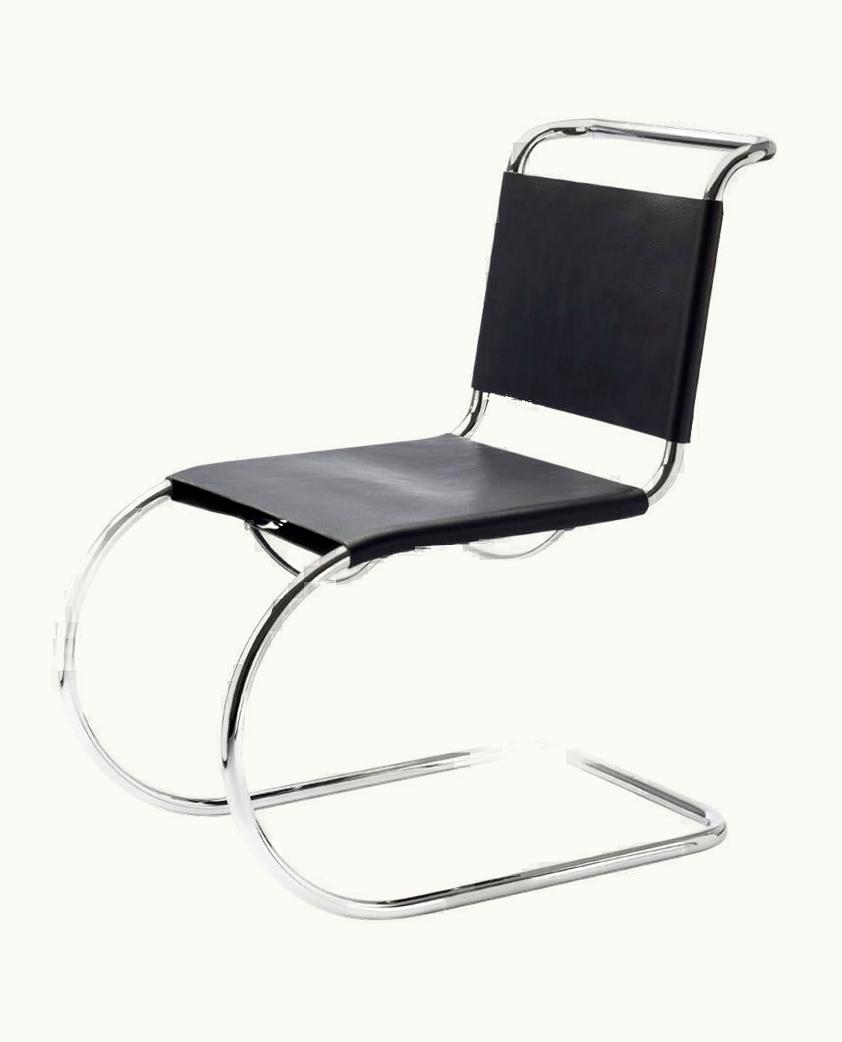
For illustration purposes only.
Product Details
- Brand Product Ref:
- —
- GLINT Product Ref:
- GL0199918
- Year:
- —
- Retail Price:
- --
- Buy Now:
- --
Technology transforms into furniture; a revolutionary invention evolves into an elegant interior design piece. Ludwig Mies van der Rohe imbued the cantilever chair with aesthetic lightness and complemented its surrounding environment with curved lines. During the Weissenhof Estate exhibition, which he organized, Mies van der Rohe learned about the concept of the cantilever chair from Mart Stam. Although novel at the time, Mies van der Rohe was unimpressed with Stam's initial implementation, and responded with his own aesthetic solution, the S 533, in 1927. The S 533, one of the earliest cantilever chairs, features a gracefully curved circular steel frame that defines and elevates any space. The chair's elegance, transparency, and targeted use of materials characterize the S 533, and its ingenious design allows for constant adjustment and flexing, making it one of the most comfortable chairs of its time. Unlike many designs of the early 1920s, which prioritized simplicity and functionality, Mies van der Rohe's chair showcases his signature focus on luxurious design, combining functionality, comfort, and timeless aesthetics all in one. The S 533 epitomizes a new standard of quality and perception. The chair is available with a chrome-plated tubular steel frame, seats and backrests featuring wickerwork or bend leather, available in black, natural, or laced-back options. The chair's "GTProtect" surface for the frame, and UV-resistant mesh edition "All Seasons," also make it suitable for use indoors and outdoors.
GLINT Expert Verified
GLINT Verified is our own designation and means that we inspect every item, every time.
- Dispute Resolution
- Authenticity Guarantee
- Secured Payments
- All Sellers Are Verified
Have Questions?
AI guidance on authenticity, pricing, and buying on GLINT.
Quick questions:
Payment options

Login to See Historical Price
Unlock verified sale history, price trends, and trade range for this piece.