0
INVESTMENT PIECEINVEST
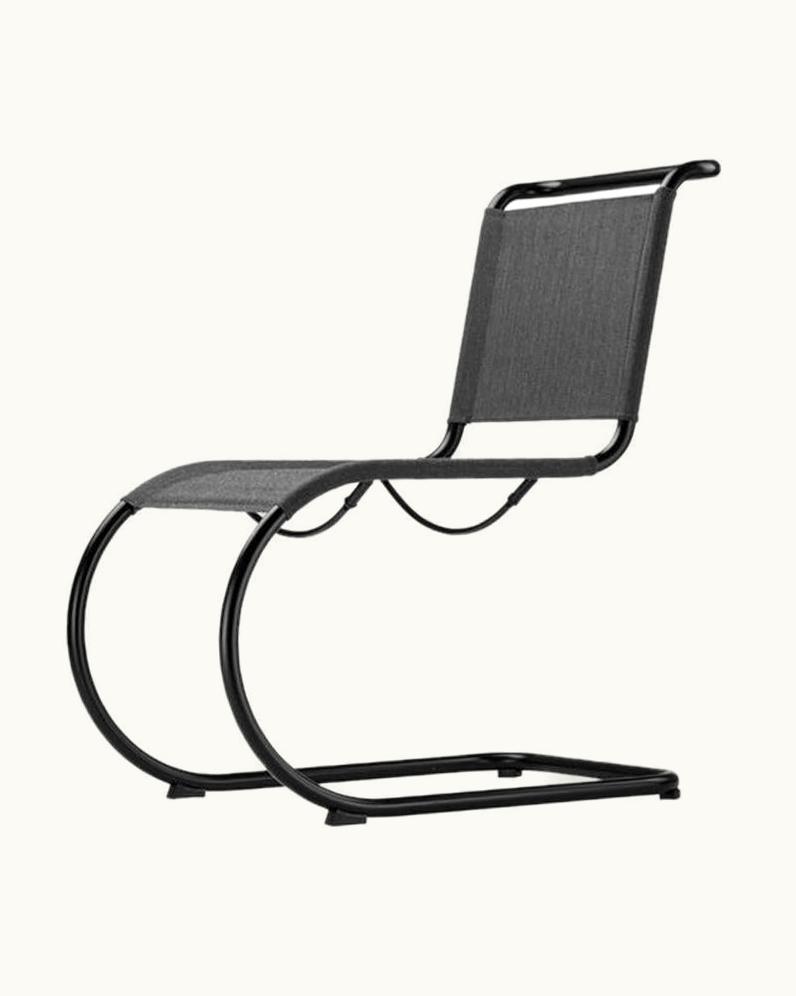
For illustration purposes only.
S 533 All Seasons Cantilever Mesh Chair Designed By Ludwig Mies Van Der Rohe
Product Details
- Brand Product Ref:
- —
- GLINT Product Ref:
- GL0199936
- Year:
- —
- Retail Price:
- --
- Buy Now:
- --
Technology is integrated into furniture design, with inventions becoming elegant objects for interior decoration. Ludwig Mies van der Rohe added aesthetic lightness to the cantilever chair and curved lines that related it to its surroundings. Previously familiar with Mart Stam's cantilever chair principle before organizing the Weissenhof Estate exhibition, Mies van der Rohe was unimpressed with Stam's initial implementation. Instead, he presented his own solution in 1927 with the S 533, which defined its environment with large, curvaceous tubular steel. S 533's elegance lies in restrained use of materials, transparent effect, and lines, with its comfort coming from flexing that allows for constant adjustment. While most designs from the 1920s prioritize functionality and simplicity, Mies van der Rohe integrated luxury into his design to create a timeless aesthetic without sacrificing comfort. S 533 represents a shift in quality perception. The frame is chrome-plated tubular steel with a seat and backrest available in wicker or bend leather, in black, natural, or laced back. The "GTProtect" surface for the frame and UV-resistant mesh (in the "All Seasons" version) make it adaptable indoors and outdoors.
GLINT Expert Verified
GLINT Verified is our own designation and means that we inspect every item, every time.
- Dispute Resolution
- Authenticity Guarantee
- Secured Payments
- All Sellers Are Verified
Have Questions?
AI guidance on authenticity, pricing, and buying on GLINT.
Quick questions:
Payment options

Login to See Historical Price
Unlock verified sale history, price trends, and trade range for this piece.